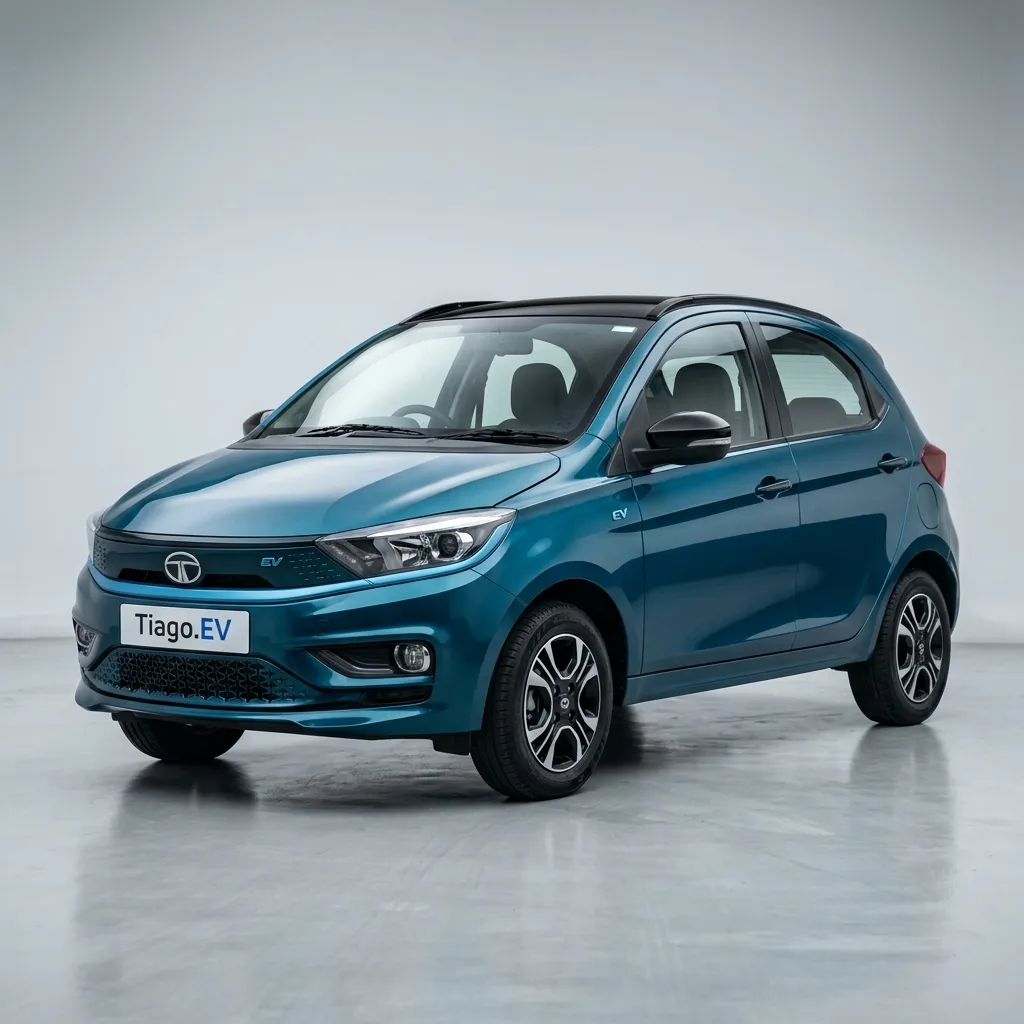
Tata Nexon EV vs Mahindra XUV400 EV Overview
The mass-market electric SUV segment in India is the primary driver of EV adoption, with mid-size electric crossovers leading the sales charts. At the center of this electric revolution are two Indian automotive giants: Tata Motors and Mahindra & Mahindra. The Tata Nexon EV has been the undisputed market leader, defining the segment with its continuous updates, tech integration, and multiple battery options. On the other hand, the Mahindra XUV400 EV is Mahindra's response, offering a larger footprint, a longer wheelbase, and an emphasis on spacious cabin comfort. In this comprehensive comparison of tata nexon ev vs mahindra xuv400 ev, we analyze how these two electric SUVs compare in terms of price, battery technology, real-world range, safety, cabin features, and ownership value.
While the Tata Nexon EV is positioned within the sub-4-meter segment, it punches above its weight by offering premium features and a refined interior. The Mahindra XUV400 EV measures 4.2 meters in length, escaping the sub-4-meter constraints to offer a larger boot and a more spacious second row. With the introduction of the XUV400 Pro range and Nexon's updated Long Range variant, the competition has intensified. We evaluate their specifications, charging times, real-world highway efficiencies, and help you determine which electric SUV fits your driving needs.
Quick Winner Summary
For buyers looking for a quick buying decision, here is the summary of which SUV wins across key parameters:
- Winner for Technology & Features: Tata Nexon EV. It features a larger 12.3-inch touchscreen, advanced driver assistance screens, V2L/V2V charging capability, and a more modern dashboard design.
- Winner for Cabin Space & Practicality: Mahindra XUV400 EV. Thanks to its 4.2-meter length and 2600mm wheelbase, it offers superior rear legroom and a larger 378-litre boot.
- Winner for Safety: Tata Nexon EV. It comes with a proven 5-star crash test rating (Bharat NCAP & Global NCAP) and standard 6 airbags.
- Winner for Value for Money: Tata Nexon EV. Starting at a lower price point of ₹12.49 Lakh, it accommodates a wider range of budgets.
Quick Comparison Table
| Feature | Tata Nexon EV | Mahindra XUV400 EV |
|---|---|---|
| Starting Price (Ex-Showroom) | ₹ 12.49 Lakh | ₹ 15.49 Lakh |
| Battery Pack Options | 30 kWh (MR) / 45 kWh (LR) | 34.5 kWh (EC Pro) / 39.4 kWh (EL Pro) |
| Claimed Range | 325 km (MR) / 489 km (LR) | 359 km (34.5 kWh) / 456 km (39.4 kWh) |
| Charging Time (DC 10-80%) | Approx. 56 minutes | Approx. 50 minutes |
| Maximum Power Output | 129 PS (MR) / 150 PS (LR) | 150 PS |
| Maximum Torque Output | 215 Nm | 310 Nm |
| Top Speed | 150 km/h (LR) | 150 km/h |
| Boot Space | 350 Litres | 378 Litres |
| Safety Rating | 5-Star (B-NCAP / G-NCAP) | Not Tested Yet |
Tata Nexon EV vs Mahindra XUV400 EV Price Comparison
Pricing is a crucial factor for EV buyers in India. Tata Motors has structured the Nexon EV pricing to cover a wide spectrum of budgets, starting from an affordable entry-point for the Medium Range (MR) variant. Mahindra has positioned the XUV400 EV Pro range to compete directly with the Nexon's mid-to-high trims. Below is the detailed tata nexon ev vs mahindra xuv400 ev price comparison across variant lines:
| Variant Tier | Tata Nexon EV Price (Ex-Showroom) | Mahindra XUV400 EV Price (Ex-Showroom) |
|---|---|---|
| Entry-Level (Base Variant) | ₹ 12,49,000 (Creative MR - 30 kWh) | ₹ 15,49,000 (EC Pro - 34.5 kWh) |
| Mid-Spec Variant | ₹ 14,59,000 (Fearless MR / LR Options) | ₹ 16,79,000 (EL Pro - 34.5 kWh) |
| Top-Spec (Flagship Variant) | ₹ 16,29,000 (Empowered+ LR - 45 kWh) | ₹ 17,69,000 (EL Pro - 39.4 kWh) |
By starting at ₹ 12.49 Lakh, the Tata Nexon EV offers a lower barrier to entry. Buyers who do not require a massive range can opt for the Medium Range variants and save significantly. In contrast, the Mahindra XUV400 EV starts at ₹ 15.49 Lakh, making it less accessible for budget-oriented buyers.
Tata Nexon EV vs Mahindra XUV400 EV Variants Comparison
The variant structures of both vehicles cater to different types of buyers:
- Tata Nexon EV Variants: Divided into Creative, Fearless, and Empowered trims. The Creative trim focuses on affordability, the Fearless trim offers a balance of comfort and tech, while the Empowered trim adds luxuries like a larger screen, ventilated seats, and advanced LED light sequences. Both MR and LR options are distributed across these trims.
- Mahindra XUV400 EV Variants: Divided into EC Pro and EL Pro trims. The EC Pro is relatively basic, featuring a simple cabin layout. The EL Pro variant adds dual 10.25-inch screens, dual-zone automatic climate control, and a wireless charger.
- Variant Value Verdict: The Nexon EV Fearless LR variant represents the best value-for-money configuration in this comparison, providing the larger 45 kWh battery pack, LED projectors, and digital instrumentation under a ₹ 15 Lakh ex-showroom budget.
Tata Nexon EV vs Mahindra XUV400 EV Battery Pack Comparison
The battery technology and chemistry used in these SUVs play a crucial role in thermal management and longevity. Both manufacturers use Lithium Iron Phosphate (LFP) chemistry, which is well-suited for hot Indian climatic conditions. The tata nexon ev vs mahindra xuv400 ev battery specifications are compared below:
- Tata Nexon EV Battery Options: Offers a 30 kWh pack on the Medium Range variant and a large 45 kWh pack on the Long Range variant. The battery is liquid-cooled and comes with IP67 ingress protection.
- Mahindra XUV400 EV Battery Options: Offers a 34.5 kWh battery on the base EC Pro and mid EL Pro trims, and a 39.4 kWh battery pack on the top-spec EL Pro trim. It also features liquid cooling and IP67 dust/water resistance.
- Battery Tech Comparison: The Nexon EV's updated 45 kWh pack is larger than Mahindra's biggest 39.4 kWh pack, allowing the Nexon to hold more charge and deliver a higher range.
Tata Nexon EV vs mahindra xuv400 ev range Comparison
Claimed range figures are tested under standardized lab conditions, but real-world range depends on driving styles, regenerative braking settings, passenger load, and air conditioning usage. The claimed range comparison is detailed below:
| Vehicle Model & Battery Size | Claimed ARAI Range | Expected Real-World City Range | Expected Real-World Highway Range |
|---|---|---|---|
| Tata Nexon EV MR (30 kWh) | 325 km | 230 - 240 km | 180 - 190 km |
| Tata Nexon EV LR (45 kWh) | 489 km | 340 - 360 km | 280 - 300 km |
| Mahindra XUV400 EV (34.5 kWh) | 359 km | 250 - 260 km | 200 - 210 km |
| Mahindra XUV400 EV (39.4 kWh) | 456 km | 310 - 330 km | 250 - 270 km |
The tata nexon ev vs mahindra xuv400 ev range comparison shows that the Nexon EV LR, with its 45 kWh battery, provides a longer driving range on both paper and real-world highway runs compared to the XUV400 EV.
Tata Nexon EV vs Mahindra XUV400 EV Charging Time Comparison
Charging infrastructure capability determines how easily these vehicles can be driven on long road trips. The tata nexon ev vs mahindra xuv400 ev charging time comparison across home and fast-charging parameters is detailed below:
- AC Home Charging (7.2 kW Wallbox): The Nexon EV LR (45 kWh) takes approximately 6.5 hours to charge from 10% to 100%. The Mahindra XUV400 EV (39.4 kWh) takes about 6 hours using a similar wallbox charger.
- DC Fast Charging (50 kW): The XUV400 EV charges from 10% to 80% in 50 minutes. The Nexon EV LR takes approximately 56 minutes to achieve the same 10% to 80% charge due to its larger battery capacity.
- Home Wall Socket (15A): A standard 15A home charger takes around 15 hours for a full charge on the Nexon EV LR, and approximately 13 hours on the XUV400 EV.
Tata Nexon EV vs Mahindra XUV400 EV Performance Comparison
Electric vehicles are known for their instant power delivery. The tata nexon ev vs mahindra xuv400 ev performance character shows different driving philosophies:
- Mahindra XUV400 EV Performance: Features a front-axle mounted electric motor producing 150 PS of power and a massive 310 Nm of torque. This torque output is the highest in its class, providing rapid acceleration.
- Tata Nexon EV Performance: The Long Range motor produces 150 PS of power and 215 Nm of torque. While power matches the Mahindra, the torque output is lower. Power delivery is smoother and more linear.
- Acceleration Sprint (0 to 100 km/h): The XUV400 EV is the faster sprinter, completing the 0-100 km/h run in just 8.3 seconds. The Nexon EV LR completes the same run in 8.9 seconds.
Tata Nexon EV vs Mahindra XUV400 EV Top Speed Comparison
Both manufacturers have electronically limited the top speed of their SUVs to prevent excessive battery drain at high velocities. The tata nexon ev vs mahindra xuv400 ev top speed figures are identical, with both vehicles reaching a top speed of 150 km/h. High-speed highway stability is good on both vehicles, though the XUV400's longer wheelbase makes it feel slightly more planted over highway expansions.
Tata Nexon EV vs Mahindra XUV400 EV Dimensions Comparison
The size differences are apparent when the two vehicles are parked side by side. The tata nexon ev vs mahindra xuv400 ev dimensions comparison is detailed in the table below:
| Dimension Parameter | Tata Nexon EV | Mahindra XUV400 EV |
|---|---|---|
| Length (mm) | 3994 mm | 4200 mm |
| Width (mm) | 1811 mm | 1821 mm |
| Height (mm) | 1616 mm | 1634 mm |
| Wheelbase (mm) | 2498 mm | 2600 mm |
| Ground Clearance (mm) | 205 mm | 200 mm |
Measuring 4200 mm in length with a 2600 mm wheelbase, the Mahindra XUV400 EV is the larger SUV. The extra length translates directly into more rear legroom, making it more comfortable for taller passengers.
Tata Nexon EV vs Mahindra XUV400 EV Boot Space Comparison
The larger exterior dimensions of the Mahindra also benefit cargo capacity. The tata nexon ev vs mahindra xuv400 ev boot space comparison shows that the XUV400 EV offers 378 litres of boot space. The Tata Nexon EV, being limited to the sub-4-meter segment, offers a slightly smaller 350 litres of boot space. For families who plan frequent weekend trips with multiple suitcases, the XUV400 offers better storage practicality.
Tata Nexon EV vs Mahindra XUV400 EV Interior Comparison
The interior design is where the two vehicles differ significantly:
- Tata Nexon EV Interior: Features a modern cabin layout with a premium multi-layered dashboard, leatherette upholstery, a two-spoke steering wheel with an illuminated Tata logo, and touch-based climate controls. The fit and finish feel premium and high-tech.
- Mahindra XUV400 EV Interior: The Pro update introduced a new dashboard layout featuring dual 10.25-inch screens. While this is a significant improvement over the older layout, the plastic quality and layout still feel slightly dated compared to the Nexon.
- Seating Comfort: The Nexon EV features ventilated front seats, which are very comfortable during hot Indian summers. The XUV400 EV lacks ventilated seats but offers a wider rear bench with more legroom, making it more comfortable for three passengers in the back.
Tata Nexon EV vs Mahindra XUV400 EV Features Comparison
Cabin features are a key selling point for modern car buyers. The tata nexon ev vs mahindra xuv400 ev features comparison reveals that Tata has loaded the Nexon EV with segment-first technology:
| Feature Description | Tata Nexon EV Presence | Mahindra XUV400 EV Presence |
|---|---|---|
| Infotainment Touchscreen Size | 12.3-inch Cinematic Screen | 10.25-inch Screen |
| Digital Driver's Instrument Cluster | 10.25-inch Full Map View Display | 10.25-inch Display |
| Ventilated Front Seats | Yes (Three Settings) | No |
| 360-Degree Surround View Camera | Yes (with Blind Spot Monitor) | No (Reverse Camera Only) |
| Electronic Parking Brake (EPB) | Yes (with Auto-Hold) | No (Mechanical Handbrake) |
| Vehicle-to-Load (V2L) Charging | Yes (Power external devices) | No |
| Sunroof Type | Single Pane Electric Sunroof | Single Pane Electric Sunroof |
The Nexon EV clearly leads in this category, offering advanced features like a 360-degree camera, ventilated seats, and V2L capability that are missing on the XUV400 EV.
Tata Nexon EV vs Mahindra XUV400 EV Safety Comparison
Safety is a priority for Indian car buyers. The safety features and crash test performance of both vehicles are compared below:
- Crash Test Ratings: The Tata Nexon EV has achieved a perfect 5-star safety rating in both Global NCAP and Bharat NCAP crash tests, scoring highly for both adult and child occupant protection. The Mahindra XUV400 EV has not been crash-tested yet.
- Standard Safety Kit: The Nexon EV comes with 6 airbags, Electronic Stability Control (ESC), ISOFIX child seat mounts, and hill hold assist as standard across all variants. The XUV400 EV offers 6 airbags only on the top-spec EL Pro variant, with lower variants getting dual airbags.
- Camera Assistance: The Nexon EV features a high-definition 360-degree camera and a blind-spot view monitor that displays a video feed of the side lane on the instrument cluster when using turn signals. The XUV400 EV only features standard rear parking sensors and a basic reversing camera.
Tata Nexon EV vs Mahindra XUV400 EV Real World Range Comparison
While the ARAI-certified range suggests high efficiency, real-world performance varies based on driving conditions. In real-world testing:
- Tata Nexon EV LR (45 kWh): Delivers an average efficiency of about 7.5 to 8 km per kWh. In mixed city-highway driving, this translates to a real-world range of 330 to 350 km on a full charge.
- Mahindra XUV400 EV (39.4 kWh): Delivers an average efficiency of about 7.2 to 7.6 km per kWh. The lower efficiency is due to its heavier body and less optimized regenerative braking system, yielding a real-world range of 290 to 310 km.
- Regenerative Braking Control: The Nexon EV features multi-mode regenerative braking with paddle shifters on the steering wheel, allowing the driver to adjust regen levels easily. The XUV400 EV has regen linked to its driving modes, which is less customizable.
Tata Nexon EV vs Mahindra XUV400 EV Maintenance Cost Comparison
Being electric vehicles, both SUVs have fewer moving parts than internal combustion engine (ICE) cars, resulting in lower maintenance costs. The periodic service cost for both models over 5 years (excluding tires and brake pads) averages around ₹ 15,000 to ₹ 20,000. The cost is primarily for suspension checks, brake fluid top-ups, cabin air filter replacements, and battery coolant checks. Both manufacturers offer an identical 8-year / 1,60,000 km warranty on the battery pack and electric motor, ensuring peace of mind for owners.
Tata Nexon EV vs Mahindra XUV400 EV Pros and Cons
Tata Nexon EV Pros:
- High-tech interior with dual large screens and premium dashboard design.
- Feature-rich cabin including ventilated seats and a 360-degree camera.
- Excellent safety credentials with a 5-star crash test rating.
- Highly customizable multi-mode regenerative braking with paddle shifters.
- V2L and V2V charging support to power external appliances.
Tata Nexon EV Cons:
- Sub-4-meter body limits second-row legroom compared to the XUV400.
- A-pillar is thick and can create minor blind spots for the driver.
Mahindra XUV400 EV Pros:
- Spacious cabin with excellent rear-seat legroom and headroom.
- Larger 378-litre boot space is highly practical.
- Punchy electric motor with 310 Nm of torque delivers rapid acceleration.
- Plush ride quality over bad roads thanks to a longer wheelbase.
Mahindra XUV400 EV Cons:
- Lacks key features like ventilated front seats and a 360-degree camera.
- Interior plastic quality in lower sections feels basic.
- No physical paddle shifters to adjust regenerative braking.
Who Should Buy Tata Nexon EV?
You should choose the Tata Nexon EV if you want a modern, high-tech electric SUV with premium features. It is ideal for tech-savvy buyers who appreciate items like ventilated seats, premium audio, and a high-definition 360-degree camera. It is also the best option if safety ratings and an entry-level budget of under ₹ 13 Lakh are primary factors in your purchase decision.
Who Should Buy Mahindra XUV400 EV?
You should choose the Mahindra XUV400 EV if cabin space and rear-seat comfort are your main priorities. If you frequently travel with five adults and need extra legroom and a larger boot, the XUV400 is the better option. It is also suitable for driving enthusiasts who prefer rapid acceleration and a punchier motor.
Tata Nexon EV vs Mahindra XUV400 EV: Which One Offers Better Value?
When comparing value for money, the Tata Nexon EV is the stronger proposition. By starting at ₹12.49 Lakh, it appeals to a wider audience. Even in its mid-spec Fearless trims, the Nexon EV provides a superior array of features, safety, and tech compared to the XUV400 EV. The Mahindra XUV400 EV is a capable vehicle, but it carries a higher price tag without offering the same level of feature sophistication, making the Nexon EV the better value option.